
ChatGPT by OpenAI has been in existence for years now, but a lot of people are still using it like a glorified Google Search. In reality, ChatGPT is much more than a simple search engine, it is a generative AI tool capable of answering questions, providing solutions to complicated topics, offering analytical support, writing computer codes and more. As per multiple reports, ChatGPT interactions today are focused on four major purposes, which include:
| Practical Guidance or How-To Help Searches | ~30% |
| Writing Tasks (Editing, Rewriting, and Composing) | ~24% |
| Information Seeking Queries (Questions and Factual/Statistical Analysis) | ~24% |
| Professional Workflows (Coding, Writing Emails, Generating Reports, Project Research, and Creating Summaries) | ~22% |
If you want to know how to use ChatGPT for its productive capabilities, this is the article that will bring your focus to trending, effective, and practical use cases of this tool, keeping aside the basic ones. Read along till the end to find out!
Understanding ChatGPT Beyond Its General Definition!
ChatGPT is short for Generative Pre-Trained Transformer, built to recognize patterns and execute decisions based on given data. The term ‘Transformer’ in GPT represents a neural network that’s trained for analyzing the context of given input, alongside weighing the significance of the data by breaking it down into different parts. This ‘Transformer’ architecture was built by Google back in 2017.
As ChatGPT is a model that learns context, this generative AI tool is used mostly with NLP (Natural Language Processing) for generating text similar to that of human writing. When compared with traditional or old chatbots that could answer questions through detailed responses, ChatGPT makes use of a dialog format! It allows the tool to answer even follow-up or clarifying questions.
The best part about ChatGPT is that it can seamlessly identify dangerous or inappropriate requests and reject them immediately. For instance, if you ask GPT questions about conducting illegal activities, the request will be denied! To help you understand ChatGPT for its technical supremacy, here are a few of its features you can count on:
- Being generative means that ChatGPT is a model that can produce new text, and not just classify or pull it from a random database.
- The AI model is pre-trained on an unlabeled and massive dataset, inclusive of articles, websites, and books for understanding facts, grammar, and language patterns. Thus, ChatGPT already has its own general knowledge base with a scope of continual learning.
- Self-attention layers, as part of the Transformer architecture, are used for processing input, backed with multi-head attention for driving the focus on different parts of the same input, simultaneously.
- ChatGPT doesn’t read the words you write as input. Instead, it breaks down the text into “tokens”, also referred to as chunks of the whole text. Now, these chunks can either be punctuation marks, a word or part of a word.
Effective & Practical Ways You Can Use ChatGPT
There are several use cases of ChatGPT that emerge every day. However, here are just a few of the practical ones for you to start using this generative AI tool for its productive capabilities, and not just as a random search engine:
1. Conduct In-Depth Research
ChatGPT now has the Deep Research agentic ability, introduced by OpenAI in 2025. Thus, this AI tool is now capable of conducting multi-step and autonomous internet research by analyzing hundreds of resources, including websites and PDFs.
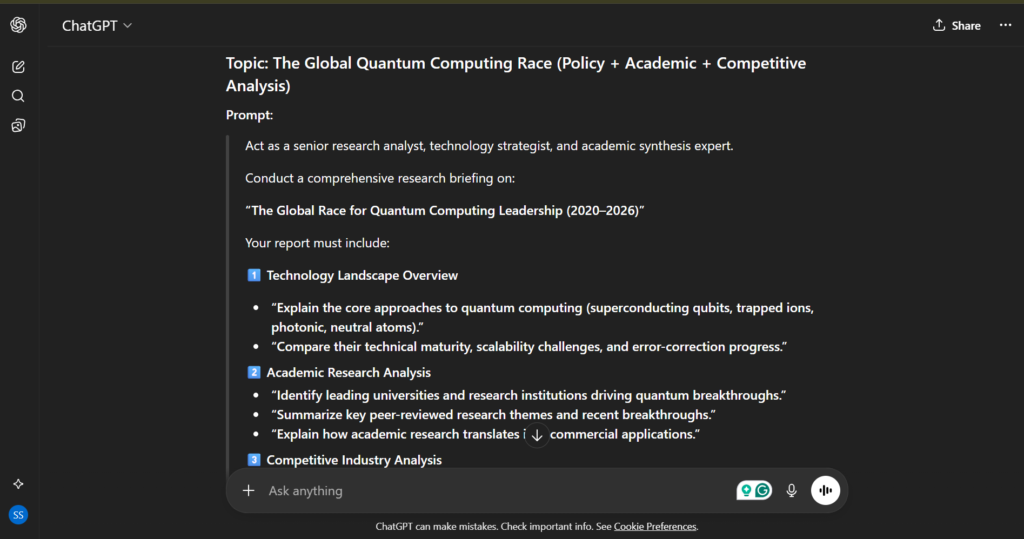
You can expect to attain comprehensive reports based on your input in a matter of a few seconds. This traditionally reduces hours of human effort, boosting their overall productivity in general or professional life. Some of the things you can do using the deep research module of ChatGPT are:
- Competitive analysis
- Academic research
- Long-form report creation
- Data analysis
2. Overcome ‘Writer’s Block’
Whether you are a professional writer or are just a creative storyteller, you might have come across a point called ‘Writer’s Block’. In simple terms, it is the time when your mind struggles to frame a sentence, even though you are a master of the context.
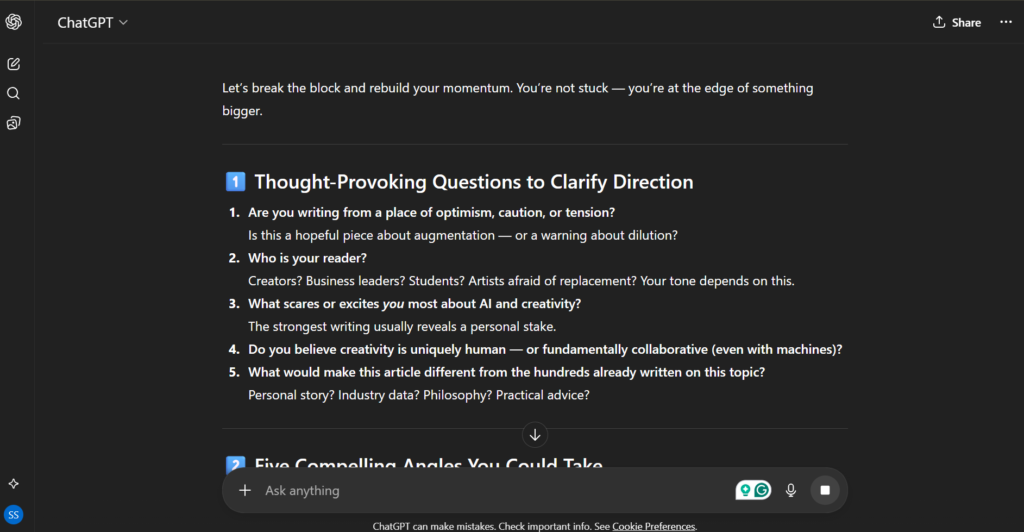
ChatGPT helps you overcome this block with adequate writing prompts and can give you a complete outline or key pointers to start filling that blank page. You can also use ChatGPT for:
- Brainstorming new content ideas
- Generate first drafts
- Refining and rewriting a draft
- Simplifying complex ideas, and more.
3. Generating Code Snippets
ChatGPT proves itself as a strong assistant in software development by writing code snippets, translating code between multiple languages, troubleshooting errors, automating code documentation, and more.
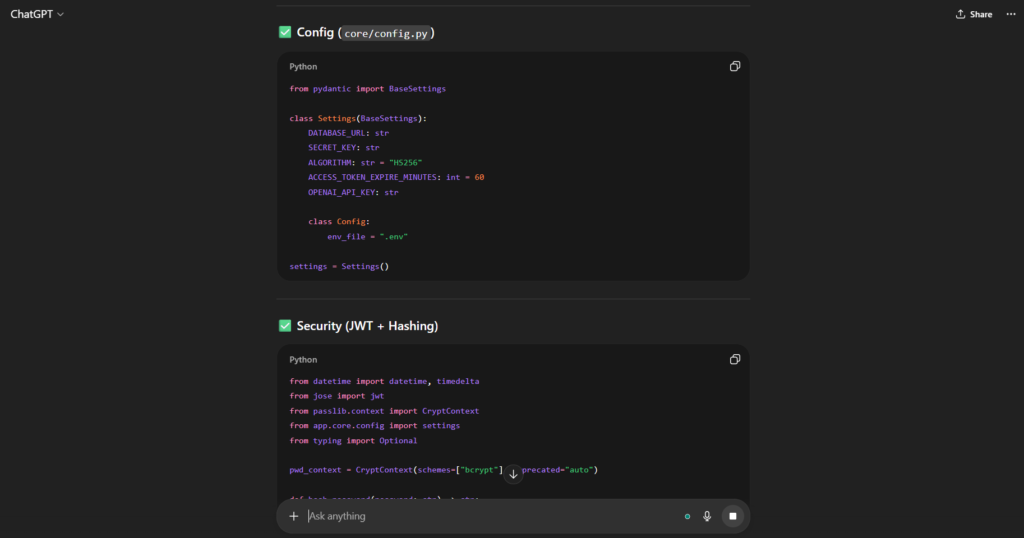
Beyond that, it also helps with:
- Explaining the functionality of an unfamiliar input code
- Generating boilerplate codes
- Identifying bugs within an existing codebase
- Adding comments to the code for better collaboration and readability
- Identifying scenarios where the code might fail
- Detecting logical errors in the code.
- Generating test cases for your existing code
4. Keyword Research
The ‘Transformer’ architecture of ChatGPT enables it to be a proficient tool for keyword research. Using it, you can uncover long-tail keywords, structure the content clusters, and analyze the search intent of your target audience.
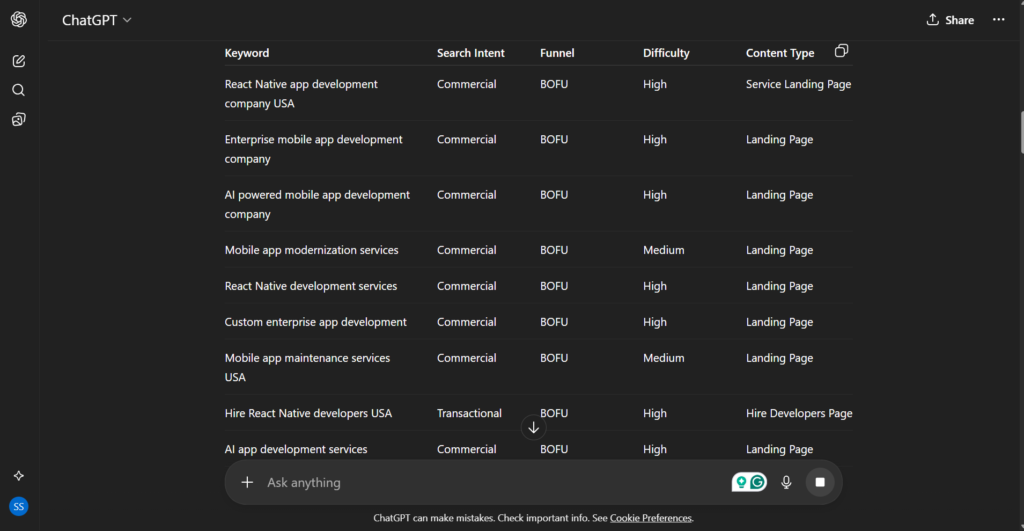
You might not be able to retrieve the real-time competition data or search volume, but you can still generate extensive keyword ideas based on the context and group them for the initial stages of SEO planning. Some of the key capabilities of ChatGPT for keyword research are:
- Keyword classification based on search intent
- Convert keyword list into topic clusters
- Run content gap analysis
- Keyword generation based on buyer personas
5. Diluting Down the Complex Concepts
People seeking knowledge on complex concepts like AI, blockchain, cloud, and other technical topics can rely on ChatGPT to get tailored and clear explanations. This AI tool is trained to break down complex concepts into small analogies and understandable explanations.
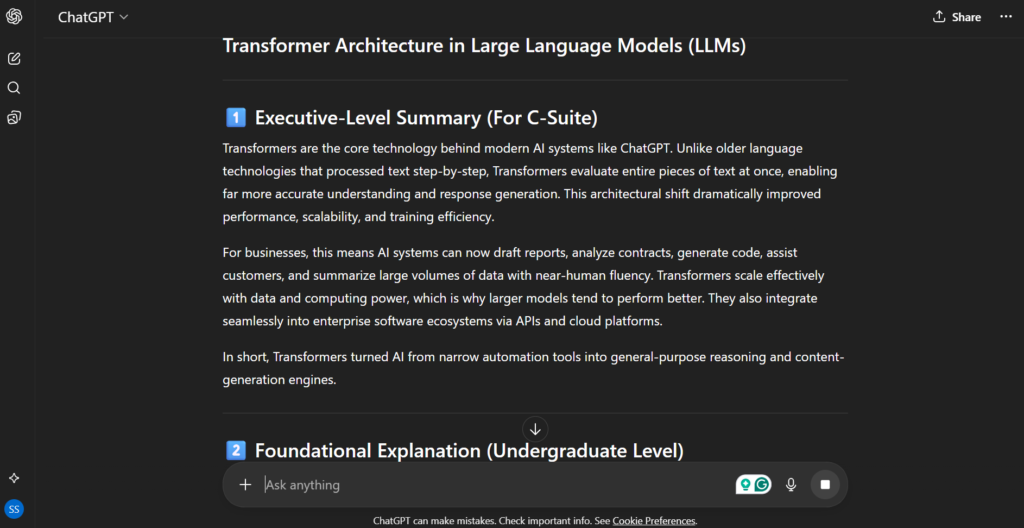
This tool omits the technical jargon and makes the responses understandable, even to absolute beginners to the topic. Some strategies that you can follow for using ChatGPT to understand complex technical concepts are:
- Create summaries of complex technical documents and articles related to the topic.
- Use structured prompts when seeking an explanation on a complex topic.
- Prefer continued interaction with ChatGPT through follow-up questions and breaking down the topic components for better understandability.
6. Data Analysis and Report Generation
ChatGPT is now speeding up the overall data analysis and reporting capabilities. It is helping individuals and organizations save ample time and money on deriving actionable insights from raw data given to it as input.
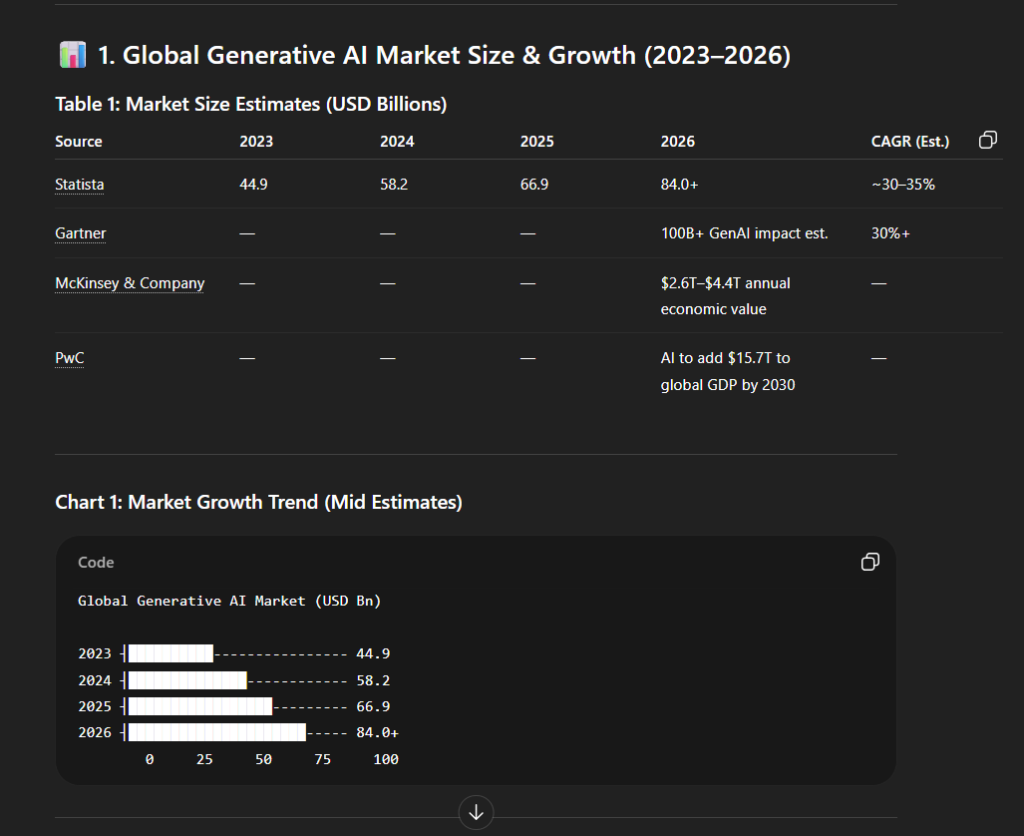
Users can simply upload their datasets in Excel or CSV format and leverage the potential of ChatGPT for cleaning, visualizing, summarizing, and exploring the values within. This tool acts as your data analyst, and can also generate charts, narrative reports, and complex statistics to meet your information or workflow quest.
Some of the key data analysis and report generation capabilities of ChatGPT include:
- Data pre-processing and cleaning
- Generates descriptive reports and charts to identify anomalies and trends in text-based data.
- Supports visual data interpretation, which means it can analyze and extract data from charts, tables, and graphs.
Conclusion
These are just a few of the many use cases that ChatGPT is versatile with! The use cases specified above will together form just the tip of an iceberg, while there are endless possibilities to explore with this innovative technology. As ChatGPT continues to improve, evolve, and learn, you will have more exclusive use cases for it.
However, for now, if you want to know how to use ChatGPT effectively, start out with these use cases. Whether on a professional ground or a self-exploration initiative, ChatGPT can help you be productive with every bit of information it generates, considering your prompts or data are relevant and context-driven!